A great fantasy world does not begin with magic. It begins with limits. What can power do? What can it not do? Who pays the cost? Who lives with the consequences when someone reaches too far?
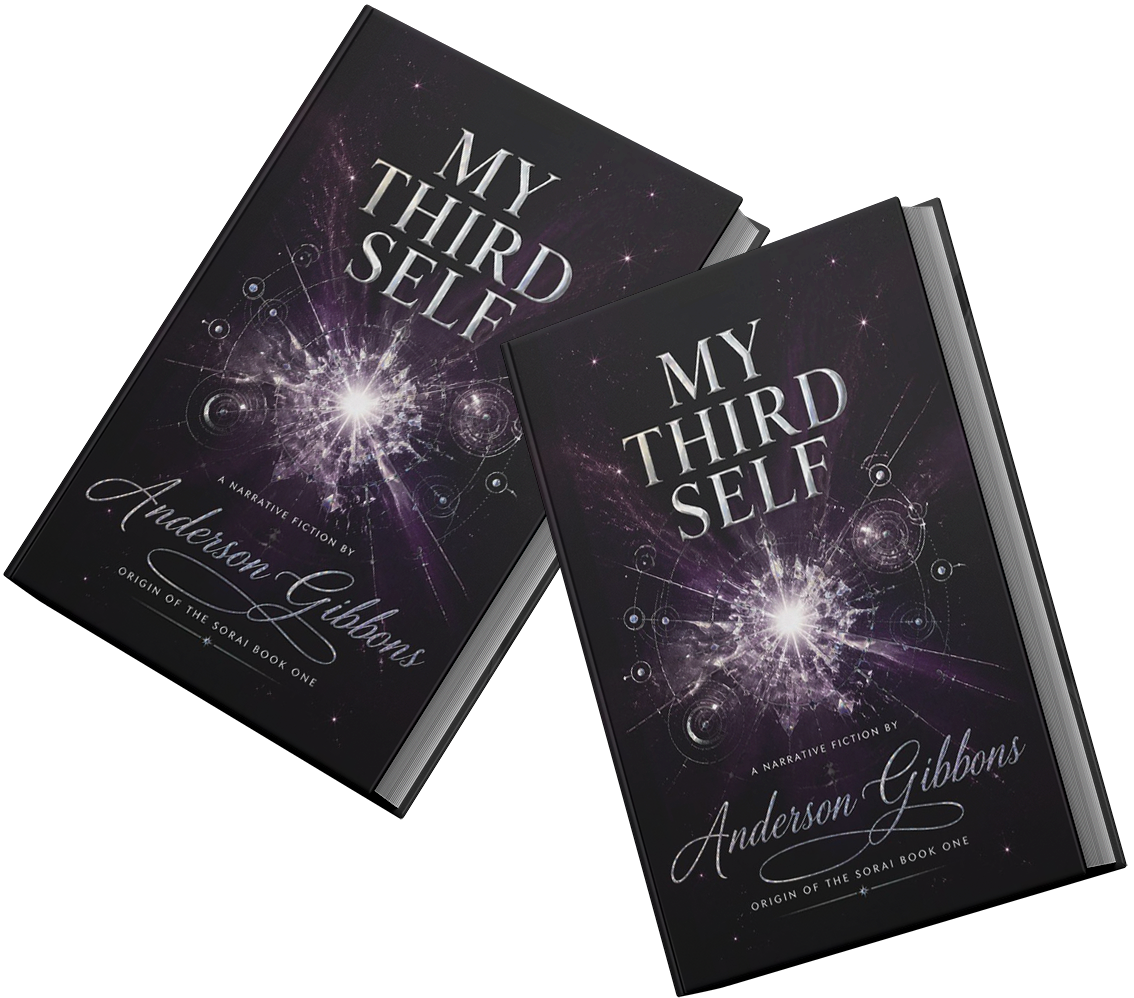
That is one reason My Third Self by Anderson Gibbons feels so distinct. Its world is not built simply to impress the reader. It is built to test its characters. Time has rules. Memory has weight. Language carries danger. Secrets protect people, but they also wound them. Power can save a family, but it can also expose what should have stayed hidden.
That is where strong fantasy becomes more than decoration.
Readers often talk about world-building as if it means size. More kingdoms. More histories. More creatures. More maps. But the best world-building is not only about how much an author creates. It is about whether the world has pressure. Do the rules matter? Do they shape choices? Do they force characters into impossible positions?
In My Third Self, they do.
The story moves through hidden planes and powerful houses. Time, Light, Death, Body, Life, Knowledge, and Wisdom are woven into the structure of existence. These forces do not sit in the background. They influence how characters act, what they fear, what they protect, and what they are willing to keep secret.
That last part is important. Secrets are one of the book’s strongest engines. Not cheap secrets, not twists added for shock, but the kind of secrets families and civilizations carry because the truth may do damage. The book understands that some truths do not simply reveal. They break. They change the room. They change relationships. They change what survival means.
That is why the world of My Third Self feels serious. It has beauty, but it also has burden.
Oryious, the central figure, is divided across three selves: past, present, and potential. His First Self is tied to old mistakes. His Second Self belongs to the current moment. His Third Self guards what he may still become. This structure gives the book a rare kind of tension. The danger is not only outside him. It is also within the very idea of identity.
What happens when a person can see too much of what they were? What happens when the future is not a promise, but something that must be protected? What happens when memory is not soft, but sharp?
Those questions give the fantasy its emotional bite. Anderson Gibbons does not make the world simple for the sake of speed. He gives readers a layered realm that asks for patience, and that patience is part of the reward. The more the reader understands the rules, the more meaningful the story becomes. A power is never just a power. A plane is never just a place. A family role is never just a title.
Everything has a cost. That is the sign of mature fantasy writing. It does not treat wonder and pain as opposites. It understands that a world can be beautiful because it is dangerous. It understands that love can drive great courage, but also terrible fear. It understands that protection can become its own kind of prison.
For readers who enjoy fantasy with clean answers, My Third Self may feel demanding. For readers who enjoy fantasy that makes them think, it offers a rich experience. It is not just asking who wins. It is asking what winning costs.
That is what makes its world worth entering. The rules hurt because the stakes matter. And when the stakes matter, the story stays with you.